For Managers
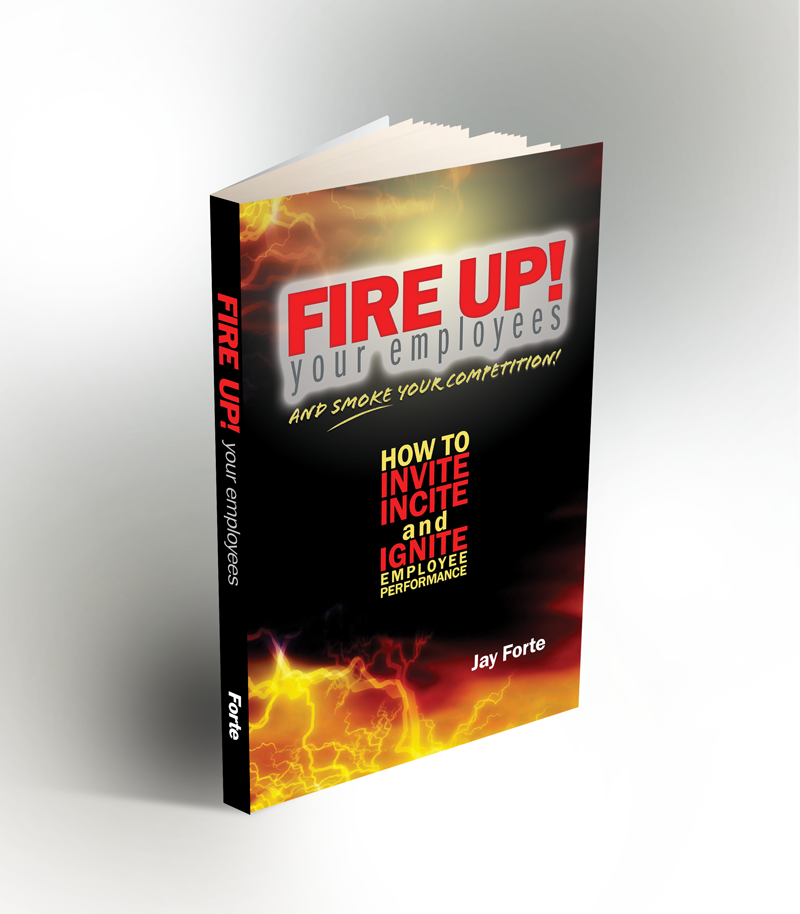
Fired up! – passionate, excited, engaged and enthusiastic – is the only way to approach the workplace. Employees who are excited, passionate and fired up!:
• Consistently outperform, out-service and out-invent all other employees.
• Come to work ready to make a conspicuous difference.
• Are more accountable and responsible for their performance and results.
And this starts with you – the manager; great employee performance starts with great management. Fired Up! employees require managers who know how to create employee-focused workplaces, hire the right employees, activate their passion for performance and stay in constant contact with each employee. Today’s you are a coach, counselor, mentor and educator; this is what it takes to engage and inspire employees to perform.
Welcome to your manager section for tools to help you engage and inspire today’s employees. Use the articles, links, blog and other resources to expand your understanding of how to help your employees be their best, drive great results, work strong and live stronger.
Management Tools
Management Articles (to help you maximize your impact and your employees’ performance).
See my Power Performance blog at www.Bizmore.com. Click on the link below.

July 29, 2010 -- 5:27 am
I work with executives and people who want more out of life. I want the same for me. And in the process of helping people achieve their greatness, one of the most valuable tools is journaling.
Life now moves at the speed of blur. Most days we fall into bed nearly unaware of all that happened in the day. Information moves through our heads so quickly that it rarely registers as it passes over our brains. So, slow it down for a minute. Get out a journal and write.
Here are some amazing things that happen when you start to spend some time with yourself and record your thoughts:
1. You start to notice details you previously did not notice; you improve your vision and awareness.
2. You start to see how you behave, what you think and what you feel with greater clarity – you start to better understand yourself.
3. You become more connected to your world, your relationships and your sense of self.
Journaling is a great reminder that you own your life and your responses. Journaling helps you to sort through feelings, emotions, ideas and perspectives. Journaling asks you to talk to yourself, to see what you really believe, what you really want, and what you really feel. This is what makes journaling difficult for many people. But the benefits – the awareness it creates – is priceless – in both work and life situations.
To get started journaling, I recommend the following:
1. Buy a lined notebook. I like handwriting instead of using a computer, but do what makes you feel more comfortable.
2. Commit a time each day to journal. Spend 10 minutes in that time period and write whatever comes to mind. The first week is difficult. But once you get your groove, you will look forward to journaling.
3. Start by recording a statement, then journal what you think about it. Examples:
a. I am most happy when I am …..
b. Something that I thought would be difficult, was easy…
c. Two great people I met today were…
d. I feel my most capable when I am doing…
4. Allow yourself to write whatever comes to mind. Don’t edit.
5. Once you get in the habit, spend time reviewing what you write. What information does it tell you about you – your talents, strengths and passions?
Get reconnected to the greatness that is in you. Start by writing down what you think and feel. Start to tell your story. Journaling… it does a body good…
Watch for my new book, The Greatness Zone – Know Yourself, Find Your Fit, and Transform the World, due out this September.
Leave a Comment
July 25, 2010 -- 9:28 am
The tendency by many organizations in the recession was to reduce head count but maintain the same responsibilities, now with a smaller workforce. The surviving employees were now saddled with responsibilities that did not match their talents, strengths or passions. They feel overwhelmed, underappreciated and undervalued. This disengages your best employees. And, as recent surveys indicate, these same employees are now unhappy with their work and indicate that as times improve, they will look to change jobs.
So consider this. Look at the roles and responsibilities in the organization that must be done by the core, fulltime staff. Then determine all other roles and responsibilities that can be hosted by flexible free agents – outsourced by people who are as talented about the particular role as your full time employees are in their roles. Flexible free agents are those who do a particular task for many companies – on a part-time basis. Think of flexible free agents as the half step between a fulltime employee and an entrepreneur. Many have been laid off from their roles and have strung several part-time, task-specific roles together to invent a new job. This creates a new and valuable type of contract employee in today’s workplace.
So, back to your workplace. Some roles are so core to the business that it is important to have them staffed by fulltime employees. Some roles can be done on a part-time or temporary basis by someone who is exceptional at the task (flexible free agents). This way, free agents are hired only when needed, do not incur additional overhead, and are extremely productive. This allows the full time employee to stay more focused on their critical responsibilities – those that drive greater customer loyalty, drive greater results or increase efficiencies.
Here are two examples:
Surveying customers is a critical responsibility of every organization; it is important that your organization always know what your customers think and feel. Though critical, it can easily be outsourced to survey organizations or to flexible free agents who specialize in this work for your industry. You need the information; you don’t need to gather the information.
Creating an employee handbook, a company intranet, or a company newsletter are all tasks that improve the quality of the work life but can be easily outsourced to allow your talented fulltime employees to stay focused on customer service and profit-generating tasks.
So what are the fixed roles for your organization? What roles can be flexible? You don’t need to hire full time employees for every role. Hire fulltime when the role requires it. Otherwise, use flexible free agents.
Please forward this to someone who can benefit from it, and contact me to help introduce how to maximize your employees’ performance.
Leave a Comment
July 21, 2010 -- 7:40 am
When most people think of the word masterpiece, they think of a painting by Degas, Rembrandt or even Warhol. Many think of da Vinci’s Mona Lisa or Botticelli’s Primavera. But a masterpiece just means an exceptional work. What is your “exceptional work?”
Here is my perspective. Each of us has specific talents and strengths – attributes uniquely hardwired in us. Some are great with details and solving challenges, others are exceptional listeners, relationship builders or have spiritual insight. Some are artistic and some can write. Some can invent and some are extraordinary teachers. Each of us has the ability to create our personal masterpiece – our great work.
When we discover and play to our talents and strengths, we bring our best to our lives and to our world – we access our greatness and use it to impact the world.
o A teacher’s great work can change the life of a student forever.
o An artist’s great work can change a person’s mood with their art, music or writing.
o A builder’s great work can create a safe place for a family to realize their dreams.
The point is you have a masterpiece in you – there is greatness in you. But most people are unfamiliar with how to find and release their masterpiece. It starts by knowing yourself – the talents, strengths and passions you have. Here’s how:
1. List what you are great at. What comes naturally? What do others say you are great at? What do you seem to have great success doing?
2. List what you are passionate about. What gets you excited, energized and fired up? What could you do all day and never look at the clock?
3. Review your lists. Where do they intersect? What are you good at and love doing? These are your masterpiece areas. These are your areas of greatest performance, greatest impact and most significant contribution. What things come to mind? Where are you at your best?
The more connected and self-aware you are, the clearer your masterpiece areas will become. The world needs you as you are. Don’t try to force it or to be what others insist you be; instead, play to the talents, strengths and passions you that are part of the deeper or “true you.” When you understand yourself, you will see your masterpiece emerge.
I’ll talk more about this in my new book, The Greatness Zone; Know Yourself, Find Your Fit, and Transform the World, due out in September 2010. Watch for more information soon.
Leave a Comment
|